
5 Mind blowing science fact that you didn't(might) know.

 1.The average human body carries ten times more bacterial cells than human cells

All the bacteria living inside you could fill a half-gallon jug — there are 10 times more bacterial cells in your body than human cells, according to Carolyn Bohach, a microbiologist at the University of Idaho. Don’t worry, though: most of these bacteria are helpful. In fact, we couldn’t survive without them.


2.Grasshoppers have ears in their bellies


Unlike humans, grasshoppers do not have ears on the side of their heads. Like the ears of people, the grasshopper sound detector is a thin membrane called a tympanum, or “eardrum”. In adults, the tympanum is covered and protected by the wings, and allows the grasshopper to hear the songs of its fellow grasshoppers.


3.There is enough DNA in the average person’s body to stretch from the sun to Pluto and back — 17 times


There are about 37 trillion cells in the human body, so if you were to uncoil all of the DNA encased in each cell and place the molecules end to end, it would sum to a total length of 2×10¹⁴ meters — enough for 17 Pluto round-trips the distance from the sun to Pluto and then back again is 1.2×10¹³ meters.


4. A cockroach can live for up to one week without its head


Due to their open circulatory system, and the fact that they breathe through little holes in each of their body segments, they are not dependent on the mouth or head to breathe.


5.Diamond rain on planets
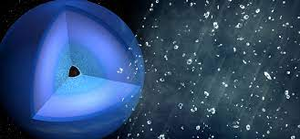

Studies have examined the potential of Neptune, Uranus, Jupiter, and Saturn to produce diamonds. The atmospheres in these four planets have extreme pressure can crystalize carbon atoms and turn them into diamonds. Scientists were able to conduct an experiment and prove this fact. Some researchers state that it may rain as much as 2.2 million pounds of diamonds on parts of Saturn every year.


Comments

Popular posts from this blog

Types of Black Holes and there formation.

Some black holes are born when a dying star collapses in on itself. Others through mergers. And some may have started off in an even weirder way. There are namely 4  types of black holes: 1. Stellar-Mass Black Holes The most well-known  black holes , stellar-mass black holes, form when a massive star reaches the end of its life and implodes, collapsing in on itself. If the imploding star is between about eight and 20 times the mass of the Sun, however, it won’t form a black hole. Instead, the collapsing material will rebound off its core, causing it to erupt as a supernova. But if the collapsing star is greater than about 20 times the mass of the Sun, its core isn’t strong enough to stop the implosion. In fact, there is no mechanism that can prevent such a star from collapsing into a black hole. Depending on the initial size of the imploding star, the resulting stellar-mass black hole can reach up to about 100 or more times the mass of the Sun. 2. Intermediate Mass Black Holes...

What is a Dyson sphere? How much energy can we harvest through it?

  A Dyson sphere is a hypothetical megastructure that completely encompasses a star and captures a large percentage of its power output. The concept is a thought experiment that attempts to explain how a spacefaring civilization would meet its energy requirements once those requirements exceed what can be generated from the home planet's resources alone. Because only a tiny fraction of a star's energy emissions reaches the surface of any orbiting planet , building structures encircling a star would enable a civilization to harvest far more energy. The concept was later popularized by Freeman Dyson in his 1960 paper "Search for Artificial Stellar Sources of Infrared Radiation ". Dyson speculated that such structures would be the logical consequence of the escalating energy needs of a technological civilization and would be a necessity for its long-term survival. He proposed that searching for such structures could lead to the detection of advanced, intelligent extrat...